
The Second Lighthouse
You were shown one path and told it was the whole map.
For a while, that may have been enough.
You learned how to follow the first light: school, work, stability, the life that made sense from shore.
That light mattered. It gave you skills, structure, a name for what you did, and a route through waters you were not yet ready to cross alone.
But some people eventually discover that one path cannot hold everything they are becoming.
They have more interests than one career can contain.
They arrive where they were told to go and realize that arrival is not the same as belonging.
You built the life that made sense.
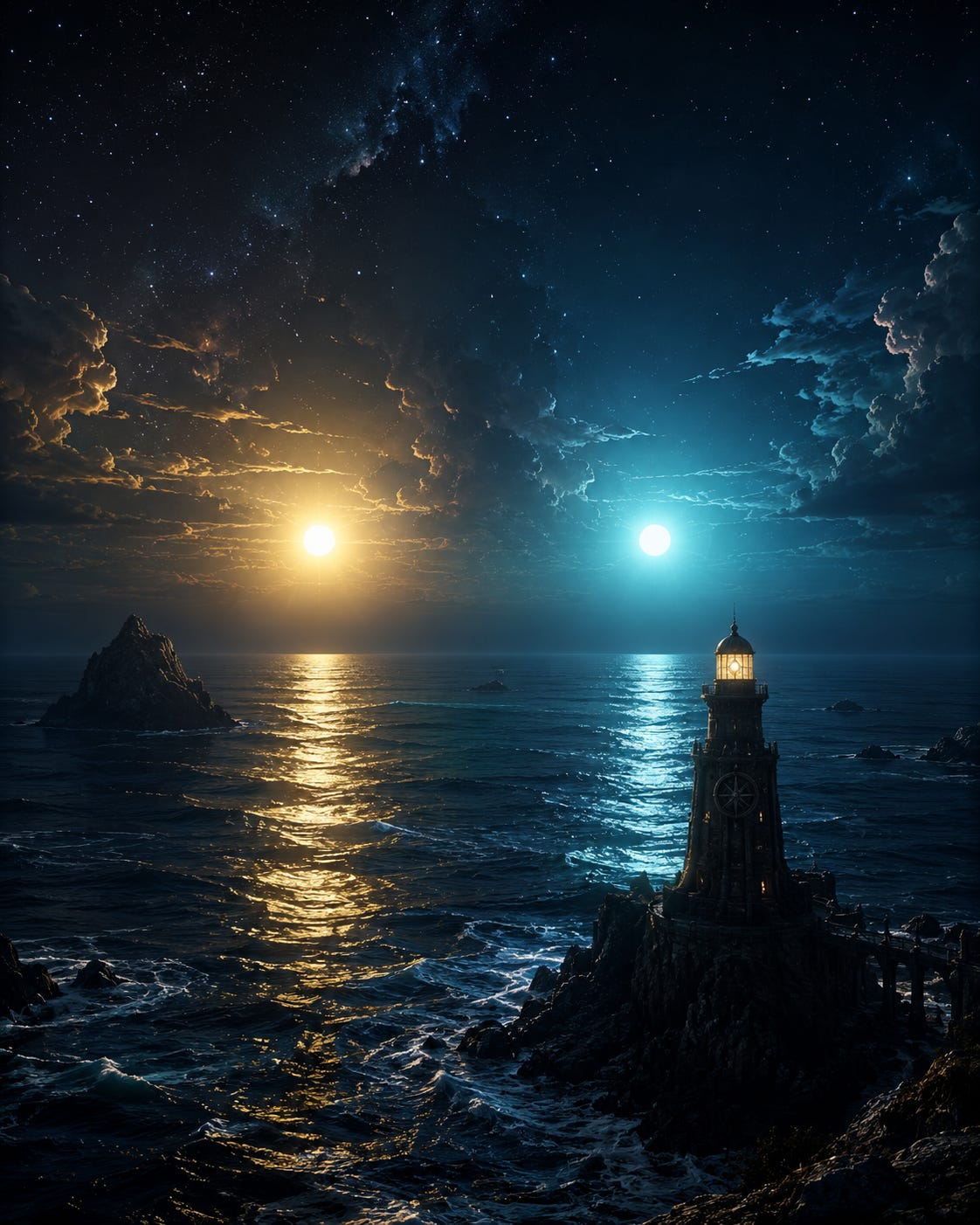
And still, another light appears offshore.
At first, it rarely looks like a new life.
It looks like an interruption.
A project keeps returning while you are trying to work. A tool makes you wonder what one person could build now. You save an idea, then another, then another, until your notes app starts looking like a map of lives you almost entered.
That is where the second lighthouse appears.
Not as a complete plan.
As a signal.
The world has opened into a new ocean of possibility. AI, software, cameras, machines, and global distribution have given individuals capabilities that once belonged to companies, studios, and entire departments.
The problem is no longer whether something can be made.
It is deciding what deserves to be made, and whether any of it moves you toward a life that feels more like your own.
Possibility is easy to collect.
It is much harder to navigate.
This publication is where I learn to do that.
I write about apps, cameras, drones, optics, automation, strange machines, independent business, and projects that begin with “this probably won’t take long,” which remains one of the most reliable entrances to a much larger problem.
If you are trying to turn curiosity into capability, build work you own, and move toward a life with more control over your time, you are in the right place.
